
New Procedures Replacing Parallel Landings at San Francisco: What Changes for Passengers
San Francisco is replacing the popular “parallel landings” with a new procedure. Find out why this happened, how the landing will work and what travelers planning a flight through SFO should consider.
Why were parallel landings often filmed at SFO?
San Francisco International Airport is considered one of the most picturesque airports in the United States. Its two parallel runways allow several flights to be handled at the same time, and the open view of the Golden Gate Bridge makes the landing process especially photogenic. That’s why social‑media videos frequently showed passengers on one flight filming a neighboring aircraft gliding slowly down the adjacent runway, creating a “double‑show” effect. Those clips attracted not only aviation enthusiasts but also ordinary travelers looking for striking experiences.
What prompted the airport to change its approach?
Despite the visual appeal, parallel landings demand high coordination among pilots, controllers and ground crews. In adverse weather, strong winds or limited visibility, the risk of conflicts rises. Controllers at SFO noted that frequent delays and the need to constantly adjust trajectories increased staff workload. As a result, airport management, together with the Federal Aviation Administration (FAA), decided to implement a stricter, safety‑focused procedure, replacing the traditional “parallel” maneuvers.
What does the new procedure look like?
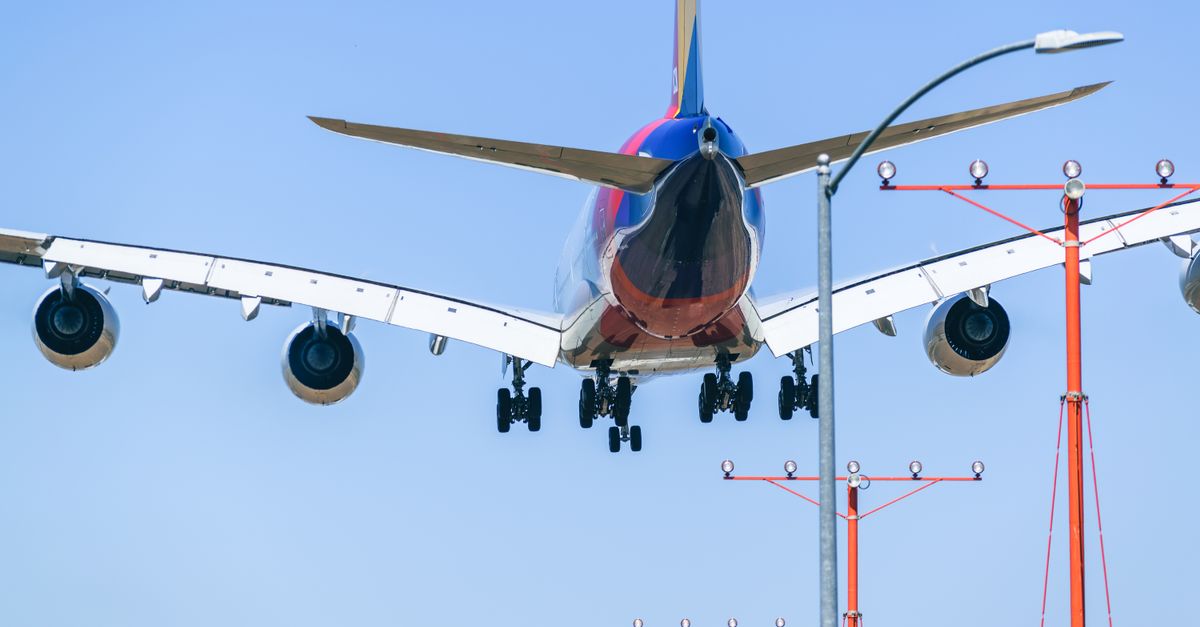
Photo: by Thomas Parker on Pexels
The new system calls for sequential landings, giving each flight its own time slot to enter the landing area. Instead of two aircraft descending simultaneously, controllers now use more flexible routes that let a plane approach the runway at a slight angle and then line up only when it is close to the taxiway. This reduces the chance of intersecting paths and simplifies distance monitoring between aircraft.
Key features of the new procedure:
- Increased spacing between flights – each aircraft can complete its final approach without rushing.
- Flexible approaches – pilots may use a wider set of entry points, which is especially helpful when wind conditions change.
- Enhanced control – controllers receive more precise position data for each airplane, making real‑time decision‑making easier.
What will change for passengers?
For most travelers the difference will be invisible while they are inside the terminal, but a few points are worth noting:
- Possible schedule tweaks – switching to sequential landings may cause minor delays, particularly during peak hours when traffic is heaviest.
- A calmer boarding experience – passengers watching the runway from a window will see a more orderly approach without the “double” aircraft, which can reduce anxiety for those sensitive to noise and motion.
- Shorter taxi‑way wait times – because each plane has its own interval, the likelihood that your flight will have to wait for another aircraft to finish landing is lower.
How to prepare for a flight through SFO?
Although the new rules mainly affect crews and controllers, travelers can still benefit from a few simple habits:
- Monitor your flight status – during the transition period airlines may issue extra notices about possible schedule changes.
- Arrive early – as with any major international hub, plan to reach the terminal well before departure, especially for early‑morning or late‑evening flights.
- Don’t rely solely on visual cues – if you enjoy watching landings from the window, remember you’ll now see a more traditional single‑aircraft approach, but you can still enjoy the view of the bridge and the bay.
How do the new rules affect the aviation industry?
For airlines, moving to a stricter procedure may require modest adjustments in flight planning, but in the long run it improves schedule reliability. Controllers gain finer control over traffic flow, and pilots face fewer stressful moments when entering the landing zone.
For SFO, the change is also an opportunity to reinforce its reputation as a safe hub that can adapt to evolving conditions and regulator requirements. Even if some passengers miss the “double‑show” spectacle, the new system contributes to a more stable overall operation.
Takeaways for travelers
- Parallel landings, once a popular visual element, are gradually being phased out.
- The new procedure focuses on safety and a more predictable schedule.
- Passengers may experience slight delays during peak periods, but the overall process will be smoother.
- Planning a trip to San Francisco remains the same: check your flight status, arrive early, and enjoy the view of one of the most beautiful U.S. ports.
With all the changes in place, traveling through SFO stays convenient and pleasant, and the new rules only increase confidence that your flight will be safe and comfortable.
Based on materials from: frequentflyers.ru.
Ready to go to United States?
Sign up and find cheap flights right in the chat with our bot.