Photo: by Valeria Drozdova on Pexels
How the Iran conflict cut passenger traffic through Dubai Airport
In the first half of 2026, Dubai International Airport handled almost a third fewer passengers than a year earlier. The drop was caused by airspace restrictions over the Persian Gulf, triggered by the conflict surrounding Iran.
Dubai Airport in numbers: decline and first signs of recovery
Dubai International Airport (DXB) is traditionally seen as the main transit hub of the Middle East. In the first six months of 2026 it handled about 31.5 million passengers – a figure roughly one‑third lower than the same period in 2025. Compared with the peak of 2024, when traffic reached 46 million, that’s a drop of 31.3 %.
The toughest quarter was the second half of 2025, when for three months the airport saw only 13 million people, whereas the same period a year earlier it had 22.5 million. The 42 % plunge also showed up in take‑offs and landings: in the half‑year they fell by more than thirty percent, to 150 600 movements. Cargo volumes shrank too – tonnage dropped about 29 % to roughly 750 thousand tonnes.
What caused the sharp fall?
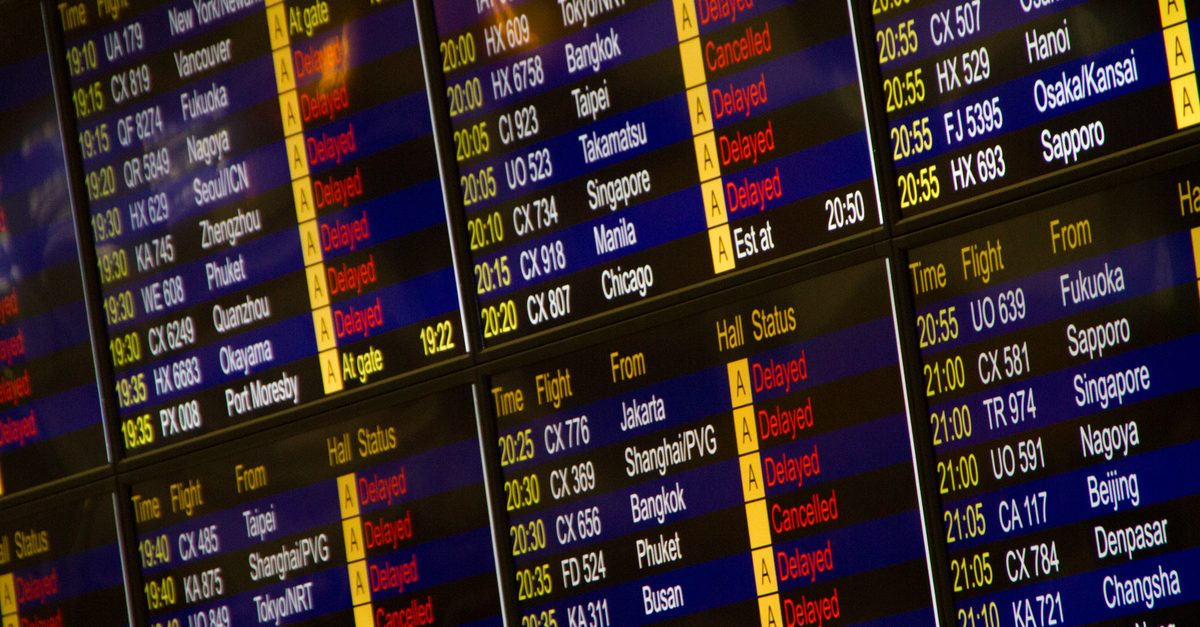
Photo: by Oscar Chan on Pexels
The main trigger was the conflict that erupted at the end of February, when the United States and Israel struck Iran. In response, the Gulf states closed their airspace, and airlines mass‑canceled flights, rerouted them or postponed. The restrictions hit not only DXB but also the nearby Dubai World Central (DWC), which also lost a sizable share of its passenger flow.
Signs of recovery in the summer months
From April to June the situation began to improve gradually. Monthly passenger numbers rose from 3.5 million to 4.5 million, and by the end of June they were already at 5 million. As limits were lifted, some airlines returned to the schedule: by the end of June about 50 of the former 90 international carriers were operating, serving more than 200 routes to almost 100 countries.
Emirates, the hub’s biggest operator, restored roughly 90 % of its normal capacity, and premium cabins are filling up completely. Still, a few major players – Lufthansa, British Airways, Singapore Airlines – remain cautious, keeping some flights to the region on hold.
What does this mean for travelers?
Fewer flights mean a tighter choice of destinations and, in some cases, higher ticket prices. Anyone planning a trip through Dubai should check for direct flights early and be ready for possible connections in neighboring hubs.
The airport’s infrastructure stays top‑notch: terminals are fully open, and transit‑passenger services (including free lounges and fast‑track security) have not suffered from the traffic dip. For those whose final destination is Dubai, the reduced schedule can even translate into a calmer tourist flow and shorter queues.
How to prepare for the trip
- Stay updated: airlines often tweak schedules in response to airspace changes. Sign up for alerts from your carrier.
- Build in extra time: when connecting, allow for possible delays caused by rerouted flights.
- Consider alternative hubs: if your desired flight is cancelled, it can sometimes be smarter to use nearby airports in the UAE or neighboring countries.
Outlook for the second half of the year
The remaining months of 2026 are expected to see passenger numbers rise as airlines return, transit traffic picks up and Dubai hosts major business and sporting events. Forecasts put year‑end traffic at about 70 million passengers, still below the 2025 level of 95.2 million, and the 100‑million target is pushed back to 2027.
Despite the current headwinds, DXB keeps its status as the world’s busiest international hub – a position it has held for more than a decade. For travelers this means that even when traffic dips, Dubai remains a reliable transfer point that can adapt quickly to changing conditions.
Based on materials from: trn-news.ru, frequentflyers.ru.
Ready to go to United Arab Emirates?
Sign up and find cheap flights right in the chat with our bot.